Skip hours of research. Our experts have tested dozens of trading bots so you don’t have to. Answer 6 quick questions and get a personalized recommendation based on your trading style and goals.”
Grid Trading Bots Explained: How They Work and When to Use Them
Grid trading is one of the most intuitive and consistently profitable strategies available to automated traders. It requires no prediction of market direction, no complex indicator logic, and no constant monitoring. Instead, it profits from price oscillation — the natural back-and-forth movement that characterizes most assets during sideways or range-bound market conditions. When automated with a grid bot, this strategy runs around the clock with zero manual intervention, systematically buying low and selling high within a defined price range. This guide explains exactly how grid bots work, when they perform best, and how to configure one that generates consistent results without excessive risk.
What Is Grid Trading?
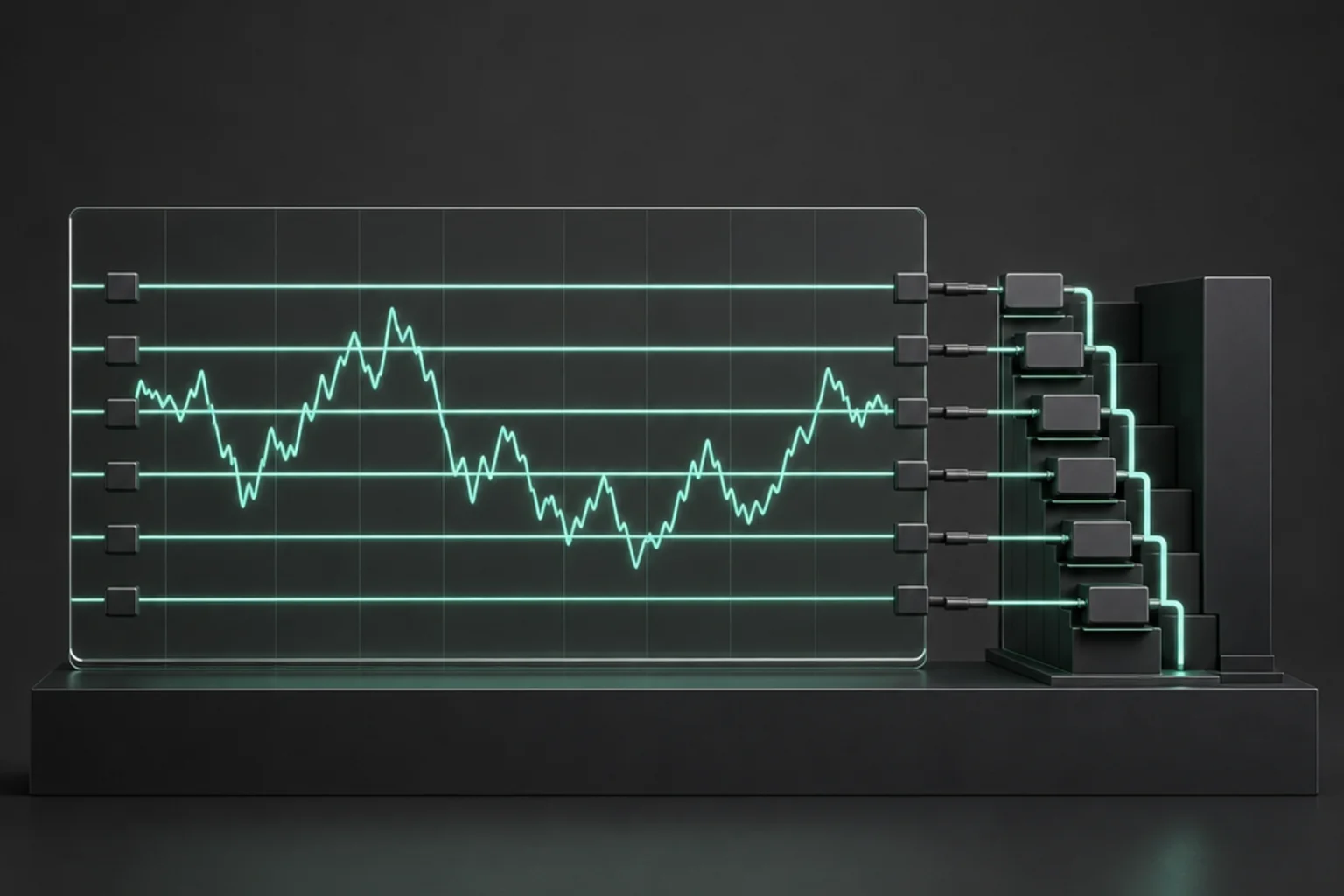
Grid trading is a strategy that places a series of buy and sell orders at regular price intervals above and below the current market price, creating a “grid” of orders. When the price falls to a buy order level, the bot purchases the asset. When the price rises back up to a sell order level, the bot sells it for a profit. This cycle repeats automatically as long as the price continues oscillating within the grid range. Each completed buy-sell cycle captures a small profit equal to the grid spacing minus fees. Over hundreds of cycles, these small gains accumulate into meaningful returns — without the bot ever needing to predict which direction the market will move next.
How Does a Grid Trading Bot Work?
A grid bot is configured with three core parameters: the upper price boundary, the lower price boundary, and the number of grid levels within that range. The bot divides the range into equal intervals and places limit buy orders at each level below the current price and limit sell orders at each level above. When a buy order executes, the bot immediately places a corresponding sell order one grid level higher. When that sell order executes, the bot places another buy order one level lower. This creates a self-sustaining cycle of trades that profits from price movement in either direction within the range. The best trading bots for grid trading include automatic range detection tools that suggest optimal upper and lower boundaries based on recent price history.
Types of Grid Bots
Neutral Grid Bot
A neutral grid bot places equal numbers of buy and sell orders on both sides of the current price. It profits from oscillation in either direction and performs best when the price stays within the configured range without a strong directional bias. This is the most common grid bot type and the best starting point for most traders.
Long Grid Bot
A long grid bot places all its orders below the current price, anticipating that the asset will rise over time. It accumulates the asset during dips and sells as the price moves upward through the grid levels. This variant is suited to traders who are bullish on the asset but want to capture additional income from volatility during the accumulation phase.
Short Grid Bot
A short grid bot places all its orders above the current price, profiting as the asset declines through the grid levels. It is suited to traders who expect the asset to fall and want to generate income from the decline rather than simply holding a short position. For context on how different bot strategies compare, see our guide on 10 Best Trading Bot Strategies.
When Grid Bots Perform Best
Grid bots are purpose-built for range-bound, sideways markets. When an asset is oscillating between support and resistance levels without establishing a clear directional trend, a grid bot will execute trades continuously and generate consistent income from the price movement. Crypto markets are particularly well-suited to grid trading because of their high volatility and tendency to trade in extended ranges between major trend moves. High-liquidity pairs like BTC/USDT, ETH/USDT, and major forex pairs are ideal candidates. For more on choosing the right exchange for grid bot deployment, see our guide on Best Exchanges for Trading Bot Integration in 2026.
When Grid Bots Struggle
The primary risk for a grid bot is a strong directional breakout beyond the configured range. If the price breaks decisively above the upper boundary, all buy orders have been filled but no sell orders remain — the bot holds a full position in a rising market it cannot sell within the grid. If the price breaks below the lower boundary, all sell orders have been filled but no buy orders remain — the bot holds a depleted position in a falling market. Both scenarios lock in unrealized losses and stall the bot's profit cycle until price returns to the range. Setting a stop-loss outside the grid boundary is the standard protection against this risk. For a broader look at managing bot risk, see our guide on AI Trading Bot Risk Management: The Complete Guide.
Get the Top 5 Bots for Early Retirement report:
How to Configure a Grid Bot
Step 1: Choose Your Asset and Range
Select an asset with a clear historical trading range and high liquidity. Review the asset's price chart over the past 30 to 90 days and identify the support and resistance levels that have contained most of the price action. Set your upper boundary near the resistance level and your lower boundary near the support level. The wider the range relative to the asset's typical daily movement, the longer the bot can operate before a breakout becomes a risk.
Step 2: Set the Number of Grid Levels
More grid levels mean smaller intervals between orders and more frequent trades — but smaller profit per trade. Fewer grid levels mean wider intervals, larger profit per trade, but less frequent execution. A common starting point is 10 to 20 grid levels for most assets. The optimal number depends on the width of your range, the asset's volatility, and the trading fees on your exchange — ensure the profit per grid level comfortably exceeds the round-trip trading fee.
Step 3: Allocate Capital Carefully
The bot needs sufficient capital to fill all buy orders within the grid. Calculate the total capital required by multiplying the order size at each grid level by the number of buy levels. Never deploy more capital into a single grid bot than you can afford to have fully committed if the price drops to the lower boundary. Starting conservatively and scaling up after validating the configuration is always the prudent approach. For more on safe bot testing before going live, see our guide on How to Test a Trading Bot Before Going Live.
Several platforms offer purpose-built grid bot tools that make setup fast and accessible. Pionex is one of the most popular choices, offering free exchange-native grid bots with automatic parameter suggestions based on historical volatility. 3Commas and Cryptohopper both support grid trading as part of their broader bot offerings. Binance has a native grid bot feature built directly into the exchange interface. For traders who want maximum customization, building a grid bot in Python using a library like CCXT gives full control over every parameter. TradingBotExperts reviews and compares the leading platforms so you can find the right fit for your goals and exchange preferences.
Take our Free Trading Bot Match Quiz
Not sure whether a grid bot or another strategy is right for you? Take our free Trading Bot Match Quiz and get a personalized recommendation based on your budget, goals, and risk tolerance in under 60 seconds. We'll also send you a free e-book with honest reviews, performance stats, and red flags to avoid in the trading bot world. Whether you're looking for a passive range-trading setup or something more active, this guide helps you make the most informed choice. Click here to take the quiz and get your free report.
Get our free Top 5 Bots for Early Retirement report plus The Bot Report newsletter — the bots we'd actually trust to compound over the long term.
Written by
Ethan Caldwell
11 min read
The TradingBotExperts Editorial Team consists of traders, analysts, financial writers, and AI researchers with over a decade of combined experience in algorithmic trading and fintech. We produce research-driven content to help traders understand automated systems, evaluate trading bots, and navigate the evolving world of AI-powered investing.
How to Choose the Best Trading Bots for Your Strategy
Take our free quiz to show how to pick bots that actually work for you
Get My Free Bot Report
Get Our Expert Bot Recommendation
Skip hours of research. Our experts have tested dozens of trading bots so you don’t have to. Answer 6 quick questions and get a personalized recommendation based on your trading style and goals.”
Join The Bot Report newsletter and get our free guide to the five trading bots most likely to help you retire early — backed by real reviews and verified performance.