Skip hours of research. Our experts have tested dozens of trading bots so you don’t have to. Answer 6 quick questions and get a personalized recommendation based on your trading style and goals.”
How to Build a Trading Bot: A Step-by-Step Guide for 2026
Building a trading bot used to require a computer science degree and years of programming experience. In 2026, that is no longer true. Whether you want to code one from scratch in Python or use a no-code platform to deploy a strategy in minutes, the tools available today make it possible for any trader to automate their approach. The question is not whether you can build one — it is how to build one that actually works. What is a trading bot? It is algorithmic software that monitors markets, evaluates conditions, and executes orders based on rules you define — without you having to watch a screen all day.
This guide walks you through every step of the process, from defining your strategy to going live with real capital. For a curated list of platforms that make this process easier, visit TradingBotExperts.com.
How to Build a Trading Bot: Step by Step
Step 1: Define Your Trading Strategy
Before you touch any platform or write a single line of code, you need a clearly defined trading strategy. This is the most important step — and the one most beginners skip. A strategy without clear rules is not a strategy; it is a guess.
Your strategy needs to answer these questions: What asset class are you trading — stocks, crypto, forex, or futures? What timeframe are you operating on — seconds, minutes, hours, or days? What conditions trigger a trade entry? What conditions trigger a trade exit? How much of your capital do you risk per trade? What is your maximum allowable drawdown before the bot shuts down?
Write your rules down in plain English before translating them into logic. For example: "Buy when the 9-period EMA crosses above the 21-period EMA on the 15-minute chart. Sell when price drops 2% below the entry price or when the EMA crosses back below." Simple, testable, and specific.
Step 2: Choose Your Build Approach
There are three main ways to build a trading bot in 2026, each suited to a different skill level and use case.
No-code platforms are the fastest path for most traders. Platforms like TradingView Pine Script strategies, 3Commas, and Coinrule let you define rules visually or with simple scripting and connect directly to your broker. No programming knowledge is required. The tradeoff is that customisation is limited to what the platform supports.
Python-based custom bots offer maximum flexibility. Libraries like CCXT for crypto and Alpaca's API for equities give you full control over every aspect of your bot's logic, risk management, and execution. The tradeoff is that this approach requires programming knowledge and more time to build and maintain.
Hybrid platforms sit in the middle. Tools like QuantConnect and Freqtrade allow you to write strategy logic in Python but handle the infrastructure — backtesting engine, data feeds, broker connectivity — for you. These are ideal for traders with some coding ability who don't want to build everything from scratch.
Step 3: Pick Your Platform and Broker
Your choice of platform and broker will determine what markets you can trade, what data you have access to, and how reliably your orders get executed. These decisions matter more than most beginners realise.
When evaluating a broker, look for a well-documented API with low latency, competitive commission structure, and strong reliability during high-volatility periods. For U.S. equities, brokers like Alpaca and Interactive Brokers are popular choices for algorithmic traders. For crypto, Binance and Coinbase Advanced offer robust API support.
Make sure your platform integrates directly with your chosen broker — switching brokers after building your bot can mean rewriting significant portions of your code.
Step 4: Backtest Your Strategy
Backtesting is the process of running your strategy against historical market data to evaluate how it would have performed. It is a non-negotiable step before deploying any real capital, and it will reveal weaknesses in your logic that are impossible to see on paper.
A solid backtest should cover at least 12 months of historical data across multiple market conditions — trending, ranging, and volatile. Key metrics to evaluate include total return, maximum drawdown, win rate, average win vs. average loss, and Sharpe ratio. According to research on backtest metrics, the most reliable backtests use out-of-sample data to validate results rather than optimising exclusively on in-sample data.
Watch out for two common pitfalls. The first is overfitting, also called curve fitting, where you tune your strategy's parameters so specifically to historical data that it stops working in live markets. The second is look-ahead bias, where your backtest inadvertently uses information that would not have been available at the time of the trade.
Step 5: Paper Trade Before Going Live
Paper trading — simulating trades in real market conditions with virtual money — is the bridge between backtesting and live deployment. While backtesting tells you how your strategy behaved historically, paper trading tells you how it behaves right now.
Run your bot in paper trading mode for a minimum of two to four weeks, ideally across different market environments. Monitor not just the profit and loss, but also execution quality, slippage, and how the bot handles unexpected conditions like data gaps or API errors. If your bot cannot perform consistently in simulation, it will not perform consistently with real money.
Step 6: Go Live With Risk Controls
When you are ready to go live, start with a fraction of the capital you ultimately intend to deploy. Going live is not the end of testing — it is the beginning of live validation. Your first weeks of live trading should be treated as a controlled experiment.
Before your bot places its first live trade, make sure these risk controls are in place: a maximum position size limit so no single trade risks more than 1 to 2 percent of your account, a daily loss limit that pauses the bot if drawdown exceeds a set threshold, a kill switch that lets you shut everything down immediately, and stop-loss orders on every open position. According to research on algorithmic trading strategies, robust risk controls are the single most important factor separating consistently profitable bots from those that fail.
Step 7: Monitor and Optimize
Get the Top 5 Bots for Early Retirement report:
A trading bot is not a set-it-and-forget-it system. Markets evolve, and a strategy that works well in one regime may underperform in another. Plan to review your bot's performance at least weekly during the first month and monthly thereafter.
Key things to monitor include live performance versus backtest expectations, execution quality and slippage, error logs and API connectivity issues, and how the bot behaves during major news events or unusual volatility. When performance drifts meaningfully from expectations, investigate the cause before making changes — sometimes underperformance is expected given current market conditions, and unnecessary tinkering does more harm than good.
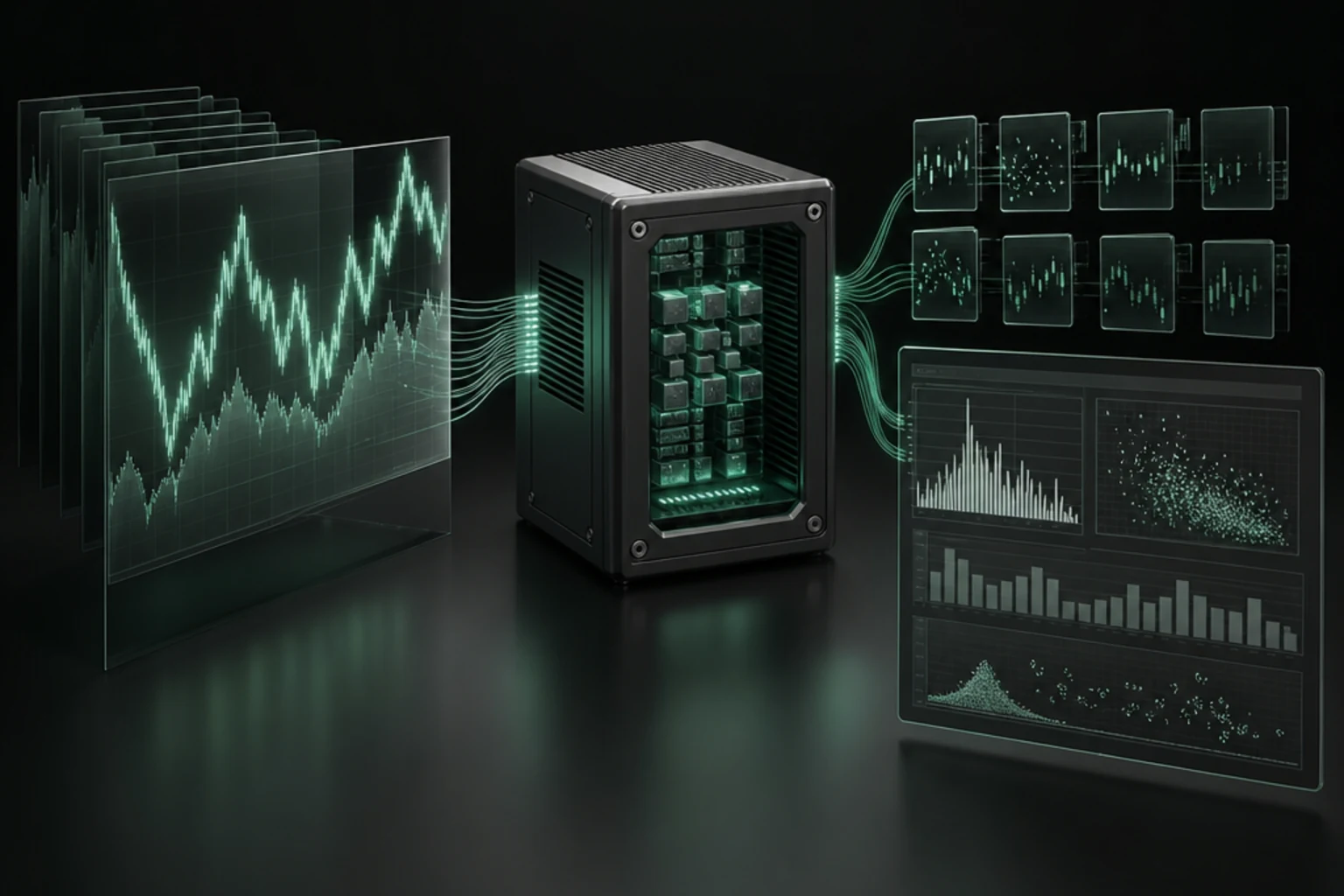
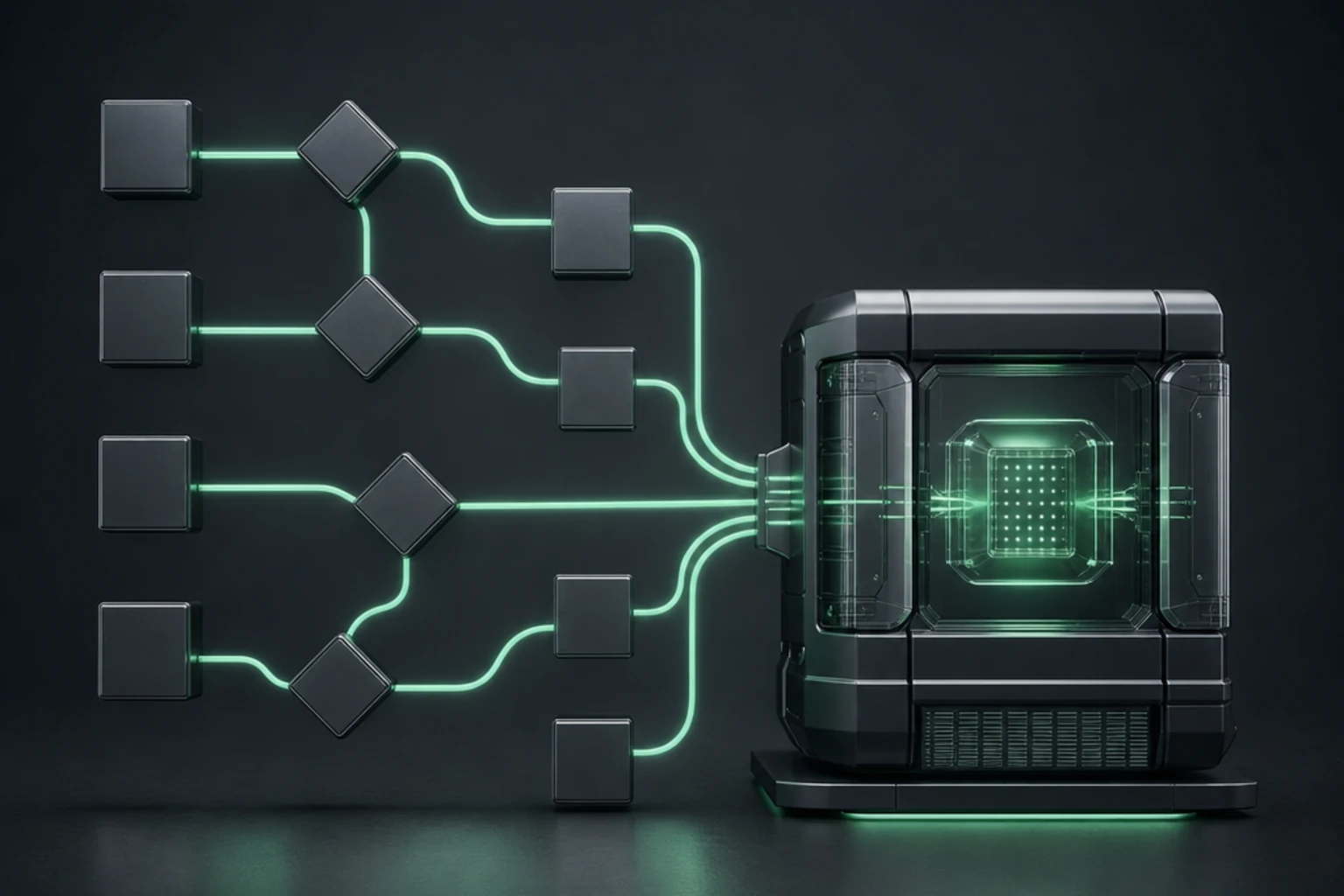
A trading bot is software that connects to a market or exchange via an API, continuously monitors price data and other inputs, evaluates those inputs against a set of predefined rules, and automatically places buy or sell orders when the conditions are met. At its core, it is an automated decision engine.
Modern trading bots go well beyond simple rule execution. High-frequency execution systems can process thousands of market signals per second, evaluate complex multi-condition logic, and route orders across multiple venues to optimise fill quality. Even simpler retail bots handle position sizing, stop-loss placement, and portfolio rebalancing automatically — tasks that are time-consuming and emotionally draining when done manually.
The most important thing to understand about what a trading bot does is what it does not do: it does not predict the future, and it does not generate profits on its own. A bot is only as good as the strategy it runs. The technology handles execution; the edge has to come from the trader.
No-Code vs Coding: Which Is Right for You?
The decision between a no-code platform and a custom-coded bot comes down to three factors: your technical skill level, the complexity of the strategy you want to run, and how much time you want to invest in building and maintaining your system.
No-code platforms are the right choice if you are new to algorithmic trading, want to get started quickly, or are running a relatively straightforward strategy based on standard technical indicators. They handle the infrastructure for you and let you focus on the strategy itself. The limitation is that you are constrained by whatever the platform supports — if your strategy requires custom data sources or highly specific execution logic, you will quickly hit the ceiling of what is possible.
Custom-coded bots are the right choice if you have programming experience, want full control over every aspect of your system, or are running a strategy that no existing platform can accommodate. The tradeoff is a significantly higher time investment upfront and ongoing maintenance requirements. You are responsible for handling data quality, error management, broker connectivity, and server uptime — challenges that no-code platforms solve for you automatically.
For most retail traders in 2026, starting with a no-code or hybrid platform and moving to a custom solution only if and when the platform's limitations become a constraint is the most practical path.
Common Mistakes When Building a Trading Bot
Most trading bots that fail do not fail because the technology is broken. They fail because of avoidable mistakes in how they were designed, tested, or deployed. Here are the most common ones to watch for.
Over-engineering the strategy. More complexity does not mean better performance. Strategies with dozens of conditions and parameters are harder to understand, more prone to overfitting, and more likely to break in live markets. Start simple and add complexity only when there is clear evidence it improves performance.
Ignoring transaction costs. Commissions, spreads, and slippage eat into returns in ways that are easy to underestimate, especially for high-frequency strategies. Always include realistic cost assumptions in your backtest — a strategy that looks profitable before costs may be a losing strategy after them.
No kill switch. Every live bot needs a way to be shut down immediately. Markets can move in ways no backtest anticipated, and the ability to stop your bot instantly — without having to close positions manually — can be the difference between a bad day and an account-destroying event.
Chasing backtest perfection. A backtest that shows a 95 percent win rate and zero drawdown is not a good sign — it is a red flag. Real strategies have losing periods. If your backtest looks too good, you have almost certainly overfit it to historical data.
Not sure which platform is right for building your first trading bot? The right choice depends on your experience level, target market, budget, and how much time you want to spend on setup and maintenance. Answering a few simple questions can save you weeks of trial and error.
Find Your Best Trading Bot in 60 Seconds
Which trading bot is right for you? Take our free Trading Bot Match Quiz and get a personalised recommendation based on your budget, goals, and risk tolerance — in under 60 seconds. We will also send you a free e-book with honest reviews, performance stats, and red flags to avoid in the trading bot world. Whether you are looking for a hands-off no-code solution or a high-performance custom system, this guide helps you make the smartest choice. Click here to take the quiz and get your free report.
Questions to Ask Yourself Right Now
Do you have programming experience, or do you need a no-code solution?
What asset class do you want to trade, and which brokers support algorithmic access to it?
How much time are you willing to invest in building, testing, and maintaining your bot?
What is the maximum drawdown you can accept before shutting the bot down?
Free Report
Before You Choose a Bot, Read This
Get our free Top 5 Bots for Early Retirement report plus The Bot Report newsletter — the bots we'd actually trust to compound over the long term.
Written by
Hannah Brooks
11 min read
The TradingBotExperts Editorial Team consists of traders, analysts, financial writers, and AI researchers with over a decade of combined experience in algorithmic trading and fintech. We produce research-driven content to help traders understand automated systems, evaluate trading bots, and navigate the evolving world of AI-powered investing.
How to Choose the Best Trading Bots for Your Strategy
Take our free quiz to show how to pick bots that actually work for you
Get My Free Bot Report
Get Our Expert Bot Recommendation
Skip hours of research. Our experts have tested dozens of trading bots so you don’t have to. Answer 6 quick questions and get a personalized recommendation based on your trading style and goals.”
Join The Bot Report newsletter and get our free guide to the five trading bots most likely to help you retire early — backed by real reviews and verified performance.

.jpg)