Skip hours of research. Our experts have tested dozens of trading bots so you don’t have to. Answer 6 quick questions and get a personalized recommendation based on your trading style and goals.”
Trading Bots and Black Swan Events: What You Need to Know
In March 2020, global equity markets lost over 30% of their value in less than four weeks. In May 2021, Bitcoin dropped 50% in a single month. In 2022, the collapse of the Terra/Luna ecosystem wiped $40 billion from the crypto market in 72 hours. These are black swan events — sudden, severe, largely unpredictable shocks that fall far outside the range of normal market behavior. For trading bots running systematic strategies built on historical data, black swan events represent one of the most serious and least discussed risks in automated trading. This guide explains what happens to trading bots during black swan events, how to protect your capital, and what risk frameworks the most resilient automated traders use to survive them.
What Is a Black Swan Event in Trading?
The term black swan was popularized by author and statistician Nassim Nicholas Taleb to describe rare, high-impact events that are almost impossible to predict in advance but seem obvious in retrospect. In financial markets, black swan events typically involve one or more of the following: extreme and rapid price movements far beyond historical volatility norms, sudden collapse of market liquidity, cascading failures across multiple asset classes simultaneously, or systemic shocks caused by geopolitical events, regulatory changes, pandemics, or institutional failures. What makes black swans particularly dangerous for trading bots is that they occur precisely in the conditions the bots were never designed to handle — because those conditions never appeared in the historical data the strategy was built on.
How Trading Bots Typically Behave During Black Swan Events
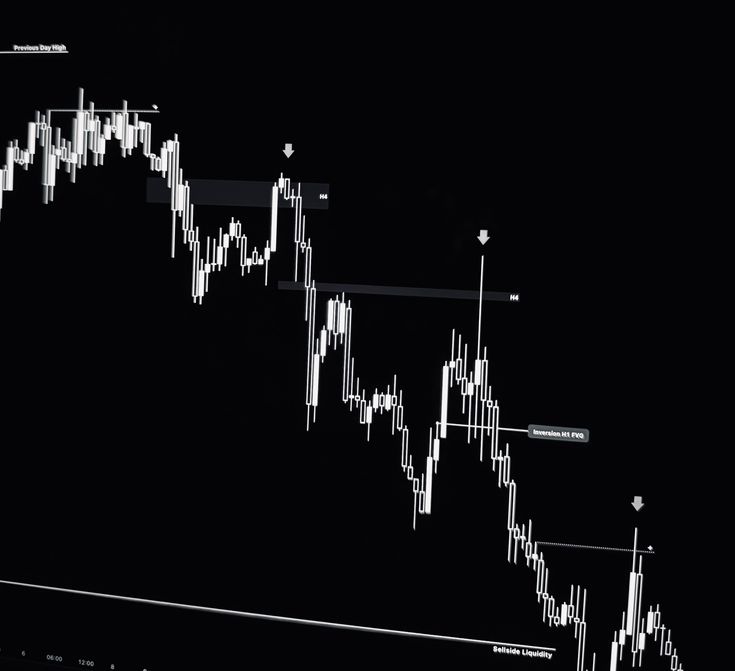
Most systematic trading strategies are calibrated to perform within a normal distribution of market behavior. When a black swan event pushes price action far outside that distribution, several dangerous things tend to happen simultaneously. Stop-loss orders fail to execute at intended prices because liquidity evaporates and markets gap through levels. Mean reversion bots keep buying into a falling market because the price looks statistically extreme — and it keeps falling further. Momentum bots enter short positions during a crash and then get caught in a violent recovery bounce. DCA bots exhaust their safety order capital before the market stabilizes. Grid bots find their entire operating range breached as price moves far beyond any configured boundary. Risk management systems that seemed conservative under normal conditions prove completely inadequate when volatility multiplies by 5x or 10x overnight. For more on the general risks of bot trading, see our guide on 7 Bot Trading Risks, and How to Avoid Them.
Why Historical Data Cannot Prepare You for Black Swans
This is the core paradox of black swan risk management: by definition, a genuine black swan event is one that was not adequately represented in historical data. Any backtested strategy will show how it would have performed during past crises — the 2008 financial crisis, the 2020 COVID crash, the 2022 crypto bear market. But the next black swan will be different. It will come from an unexpected direction, affect assets in unexpected ways, and unfold on an unexpected timeline. Over-reliance on backtested drawdown figures for black swan risk assessment is one of the most dangerous mistakes an automated trader can make. Historical maximum drawdown is a floor, not a ceiling. For a deeper look at how backtesting limitations affect strategy robustness, see our guide on How to Optimize a Trading Bot Strategy Without Over-Fitting.
Strategies for Protecting Your Bot During Black Swan Events
1. Hard Maximum Drawdown Limits
The most important protection for any automated trading system is a hard maximum drawdown limit that triggers an automatic shutdown. This is different from a stop-loss on a single trade — it is a portfolio-level circuit breaker that halts all bot activity when total account losses exceed a predefined threshold from the high-water mark. A common setting is 15% to 25% of total account value. When this level is hit, the bot stops completely and waits for human review before resuming. This single rule has saved more automated trading accounts from catastrophic losses than any other protection mechanism. Most professional automated traders treat this as non-negotiable. For a complete framework on bot risk management, see our guide on AI Trading Bot Risk Management: The Complete Guide.
2. Volatility Filters
A volatility filter monitors current market volatility — typically using the ATR (Average True Range) or VIX for equity markets — and pauses the bot when volatility spikes beyond a defined multiple of its historical average. The logic is straightforward: when markets are behaving in ways that fall far outside the normal operating range of the strategy, the strategy's edge is likely compromised. Pausing automatically during extreme volatility periods prevents the bot from applying normal-conditions logic to abnormal market behavior. Many professional systematic traders pause all strategies when the VIX exceeds 40 or when daily ATR expands beyond 3x its 20-day average.
3. Position Size Reduction in Elevated Volatility
Rather than a binary pause, some risk frameworks reduce position sizes automatically as volatility rises. When volatility is 2x normal, position sizes are cut in half. When volatility is 3x normal, positions are cut to 25% of standard size. This keeps the bot active and capturing any valid signals that emerge during the crisis while dramatically limiting the damage from false signals and extreme moves. This approach is particularly popular among momentum and trend-following systems that may generate valid signals even during high-volatility periods.
4. Asset Diversification Across Uncorrelated Strategies
Get the Top 5 Bots for Early Retirement report:
Running multiple bot strategies across uncorrelated asset classes and strategy types reduces the impact of any single black swan event on overall portfolio performance. A crash in crypto markets may not affect a forex strategy. A bond market shock may leave an equity momentum strategy intact. A strategy that loses during a crash may be offset by a short-selling or volatility-trading strategy that profits from it. True diversification across uncorrelated strategies is one of the most powerful long-term protections against black swan concentration risk. For more on strategy diversification, see our guide on Portfolio Rebalancing Bots: How to Automate Your Asset Allocation.
5. Cash Reserves and Capital Preservation
Never deploy 100% of your available capital into active bot strategies. Maintaining a cash reserve — typically 20% to 40% of total trading capital — serves two purposes. First, it limits total exposure to any single black swan event. Second, it provides dry powder to deploy into exceptional opportunities that black swan events sometimes create — historic discounts in quality assets that a well-managed DCA bot can exploit during a recovery. For more on DCA strategies during volatile periods, see our guide on Dollar-Cost Averaging Bots: The Passive Investor's Automation Tool.
Automated trading is designed to remove human emotion from the equation. But black swan events are precisely the moments when human judgment — applied calmly and with a pre-planned framework — adds the most value. Before deploying any bot, define the specific conditions under which you will manually override or halt the system. These might include: a major geopolitical event causing extreme market disruption, an exchange or broker experiencing technical failures during a volatile period, regulatory announcements directly affecting your traded assets, or your maximum drawdown circuit breaker triggering. Having these override conditions documented in advance means you are making decisions based on a plan rather than panic. The goal is not to eliminate human involvement but to ensure that when humans do intervene, they do so systematically rather than emotionally.
What the Most Resilient Automated Traders Do Differently
The automated traders who survive and thrive through multiple black swan events share several common characteristics. They size positions conservatively relative to account size, knowing that the next black swan will likely be larger than any previous one. They treat maximum drawdown limits as sacred rules, not guidelines. They hold cash reserves rather than deploying capital fully at all times. They diversify across multiple uncorrelated strategies and asset classes. And perhaps most importantly, they have a written risk management plan that defines exactly what they will do under extreme conditions — before those conditions arrive. TradingBotExperts provides the reviews, comparisons, and guides you need to build an automated trading system designed to survive whatever markets throw at it.
Take our Free Trading Bot Match Quiz
Not sure which trading bot or strategy is built for your risk tolerance? Take our free Trading Bot Match Quiz and get a personalized recommendation based on your budget, goals, and risk tolerance in under 60 seconds. We'll also send you a free e-book with honest reviews, performance stats, and red flags to avoid in the trading bot world. Whether you're building a resilient automated system from scratch or hardening an existing one, this guide helps you make the most informed choice. Click here to take the quiz and get your free report.
Get our free Top 5 Bots for Early Retirement report plus The Bot Report newsletter — the bots we'd actually trust to compound over the long term.
Written by
Marcus Feldman
12 min read
The TradingBotExperts Editorial Team consists of traders, analysts, financial writers, and AI researchers with over a decade of combined experience in algorithmic trading and fintech. We produce research-driven content to help traders understand automated systems, evaluate trading bots, and navigate the evolving world of AI-powered investing.
How to Choose the Best Trading Bots for Your Strategy
Take our free quiz to show how to pick bots that actually work for you
Get My Free Bot Report
Get Our Expert Bot Recommendation
Skip hours of research. Our experts have tested dozens of trading bots so you don’t have to. Answer 6 quick questions and get a personalized recommendation based on your trading style and goals.”
Join The Bot Report newsletter and get our free guide to the five trading bots most likely to help you retire early — backed by real reviews and verified performance.