Skip hours of research. Our experts have tested dozens of trading bots so you don’t have to. Answer 6 quick questions and get a personalized recommendation based on your trading style and goals.”
Artificial intelligence has been a buzzword in finance for years. But in 2026, the impact of AI on trading bot technology is no longer theoretical or reserved for hedge funds with nine-figure technology budgets. Machine learning models, natural language processing, and reinforcement learning are now embedded in retail trading platforms, reshaping how bots analyze markets, generate signals, manage risk, and adapt to changing conditions. This guide breaks down exactly how AI is changing trading bot technology, what it means for retail traders, and how to evaluate whether an AI-powered bot actually delivers on its promises.
From Rule-Based to Adaptive: The Core Shift
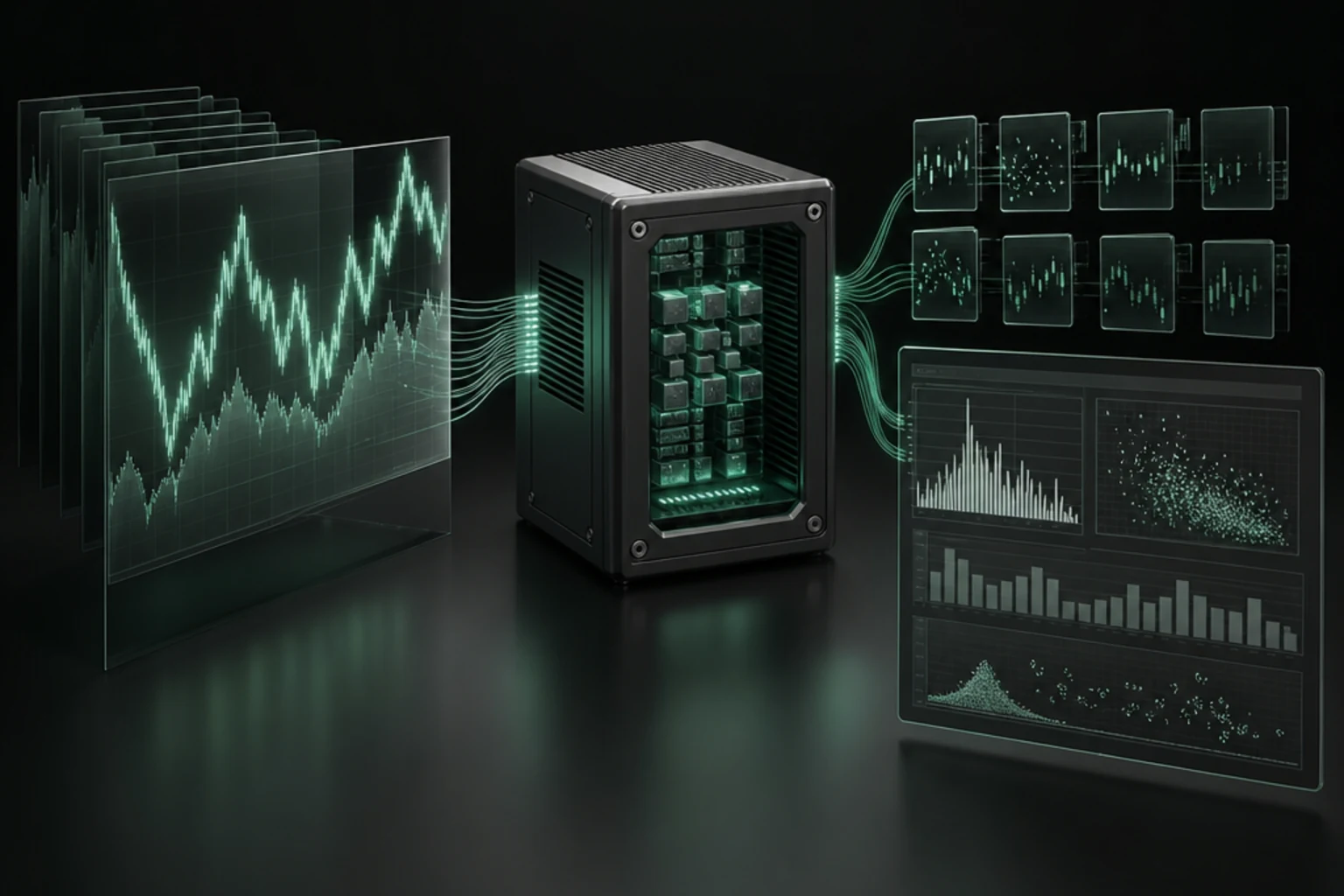
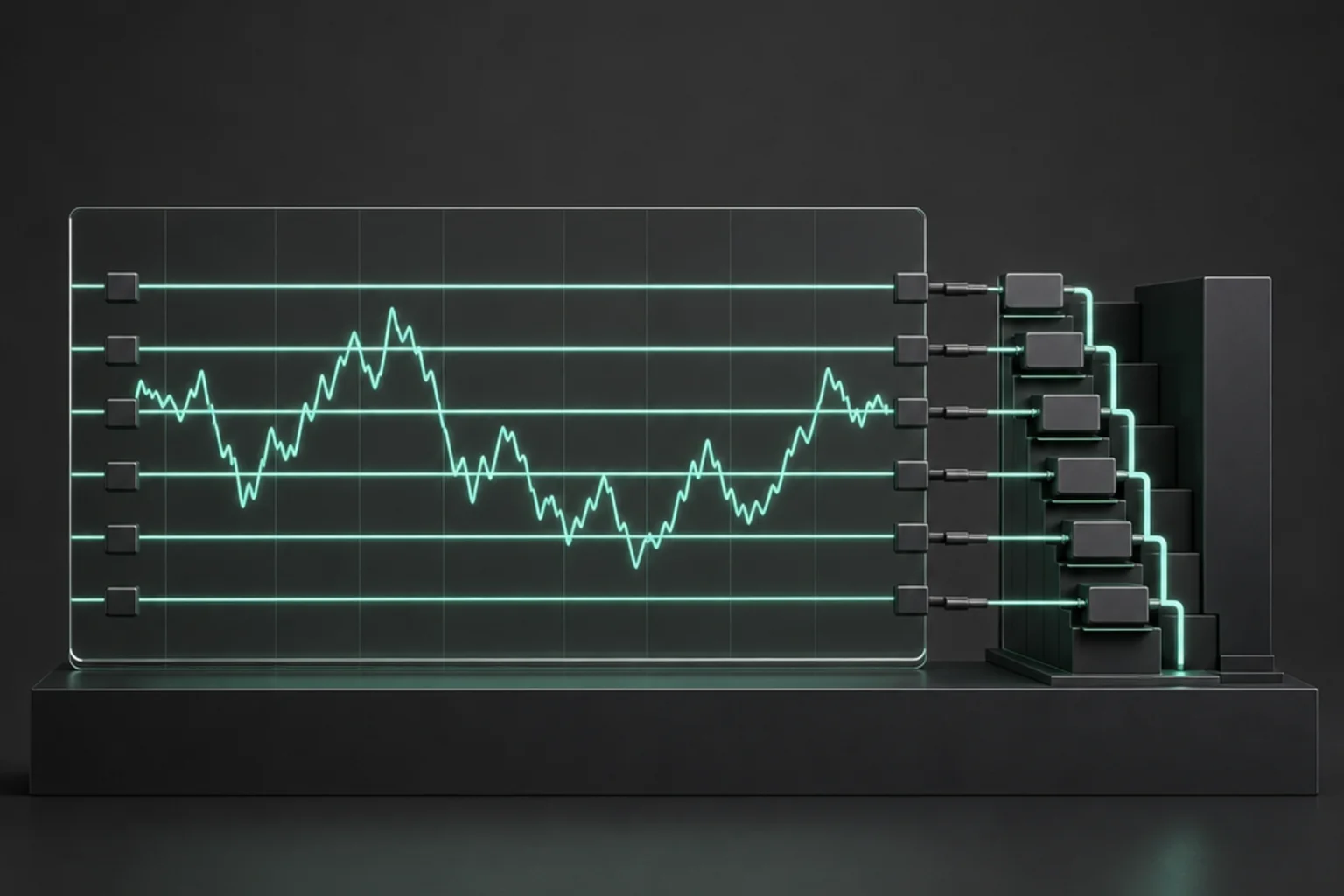
Traditional trading bots operate on fixed, rule-based logic. If indicator A crosses indicator B, buy. If price falls below level C, sell. These rules are defined by a human, remain static unless manually updated, and perform well only when market conditions match the environment they were designed for. AI-powered trading bots work differently. Instead of following fixed rules, they learn from data. Machine learning models identify patterns across thousands of variables simultaneously, update their behavior as new data arrives, and adapt to changing market regimes without requiring manual reconfiguration. This shift from static to adaptive is the most important change AI brings to trading bot technology. For more on the limitations of traditional rule-based bots, see our guide on How to Optimize a Trading Bot Strategy Without Over-Fitting.
Machine Learning in Market Prediction
Machine learning models — particularly gradient boosting algorithms, neural networks, and ensemble methods — are now widely used to generate trading signals from large, complex data sets. Unlike traditional technical indicators that process price and volume data in isolation, ML models can simultaneously process hundreds of features: price patterns, volume profiles, options market data, macroeconomic indicators, earnings data, and more. When properly trained and validated, these models can identify non-linear relationships between variables that no human analyst or simple indicator would detect. The key caveat is that machine learning models require large, high-quality training data sets and rigorous validation to avoid over-fitting. A poorly trained ML model is far more dangerous than a simple moving average crossover system — it will find spurious patterns in noise and present them with false confidence. For a deep dive into over-fitting risk, see our guide on How to Optimize a Trading Bot Strategy Without Over-Fitting.
Natural Language Processing and Sentiment Analysis
One of the most significant AI capabilities now available to trading bots is natural language processing — the ability to read, interpret, and quantify information from text sources in real time. NLP-powered bots can analyze earnings call transcripts to detect management tone shifts, scan thousands of news headlines per minute for market-moving events, monitor social media sentiment across platforms for early indicators of retail interest spikes, and process central bank communications to extract forward guidance signals faster than human analysts. The practical application is sentiment-driven trading signals that incorporate information from the broader information environment rather than just price data. Platforms integrating NLP-based signals have shown measurable improvement in signal quality for event-driven strategies, particularly around earnings seasons and major macro announcements.
Reinforcement Learning: Bots That Learn From Their Own Trades
Reinforcement learning (RL) is a branch of AI where an agent learns by interacting with an environment and receiving rewards or penalties based on its actions. Applied to trading, an RL-based bot places trades, observes the outcomes, and gradually learns which actions in which market conditions tend to produce positive results. Over thousands of simulated or live trading iterations, the RL model develops a policy — a set of behaviors — that maximizes long-term returns within its defined risk parameters. Reinforcement learning is particularly powerful for strategies that involve sequential decision-making, such as when to add to a position, when to scale out, and how to adjust risk exposure dynamically. It is also exceptionally well-suited to adapting to regime changes — the bot learns when its usual approach is not working and shifts behavior accordingly, something traditional rule-based bots cannot do. The challenge is that RL models require significant computational resources and careful reward function design to avoid learning strategies that maximize the reward metric in ways that are not actually profitable in real markets.
AI-Powered Risk Management
AI is also transforming risk management within trading bots. Traditional risk management relies on fixed parameters — a stop-loss at X%, a maximum position size of Y% of portfolio. AI-powered risk management is dynamic. Machine learning models continuously monitor portfolio exposure, correlation between positions, real-time volatility, and market stress indicators to adjust risk parameters automatically. When the model detects elevated systemic risk — rising cross-asset correlation, liquidity deterioration, or volatility regime shifts — it automatically reduces position sizes, tightens stop-losses, or pauses the bot entirely. This dynamic risk adjustment is significantly more responsive than any manually updated fixed parameter system. For more on risk management frameworks, see our guide on AI Trading Bot Risk Management: The Complete Guide.
AI Features Now Available on Retail Platforms
Get the Top 5 Bots for Early Retirement report:
AI capabilities are no longer confined to institutional platforms. Several retail-accessible trading bot platforms now incorporate AI-powered features. TradingView's Pine Script ecosystem supports ML-based indicators developed by the community. Trade Ideas uses an AI engine called Holly to generate and rank trade ideas based on pattern recognition across thousands of stocks daily. Tickeron offers AI-based pattern recognition and confidence scoring for chart setups. Composer allows retail traders to build algorithmic strategies that incorporate ML-based signals without coding. And platforms like Numerai and Quantopian have brought quant-style ML modeling to retail traders through community-based prediction markets. The best trading bots in 2026 increasingly differentiate themselves through the quality and transparency of their AI capabilities rather than just the breadth of their strategy library.
How to Evaluate AI Claims From Bot Platforms
The proliferation of AI in trading bot marketing has created a significant noise problem. Every platform now claims to use AI, machine learning, or advanced algorithms — regardless of whether their technology actually delivers on those claims. When evaluating an AI-powered bot platform, ask these specific questions. What type of AI model is used, and on what data was it trained? How is the model validated against out-of-sample data? How frequently is the model retrained, and on what data? Is live performance data available that demonstrates the AI's actual predictive value? Can the platform explain, at least conceptually, what signals the AI is detecting? Vague answers to these questions — or responses that retreat to marketing language about proprietary algorithms — should reduce your confidence significantly. For more on identifying legitimate platforms versus marketing-heavy ones, see our guide on How to Avoid Trading Bot Scams: Red Flags and Safe Platforms.
AI is not a magic solution to the fundamental challenges of trading. Markets are non-stationary — the patterns that existed last year may not exist next year. AI models trained on historical data face the same regime-change problem as traditional rule-based strategies, just with more sophisticated tooling. AI models are also opaque — the explainability problem means that even when an AI system is making money, it can be difficult to understand why, which makes it harder to know when to trust it and when to override it. And AI systems can fail in catastrophic and unexpected ways during black swan events, precisely because their training data did not include those conditions. Used thoughtfully, with proper validation and risk management, AI genuinely enhances trading bot performance. Used carelessly, it creates a false sense of sophisticated edge that can lead to larger losses than simple rule-based systems.
Take our Free Trading Bot Match Quiz
Not sure which AI-powered trading bot or platform is right for your goals? Take our free Trading Bot Match Quiz and get a personalized recommendation based on your budget, goals, and risk tolerance in under 60 seconds. We'll also send you a free e-book with honest reviews, performance stats, and red flags to avoid in the trading bot world. Whether you want cutting-edge AI automation or a simpler rules-based approach, this guide helps you make the most informed choice. Click here to take the quiz and get your free report.
Get our free Top 5 Bots for Early Retirement report plus The Bot Report newsletter — the bots we'd actually trust to compound over the long term.
Written by
Sofia Reyes
12 min read
The TradingBotExperts Editorial Team consists of traders, analysts, financial writers, and AI researchers with over a decade of combined experience in algorithmic trading and fintech. We produce research-driven content to help traders understand automated systems, evaluate trading bots, and navigate the evolving world of AI-powered investing.
How to Choose the Best Trading Bots for Your Strategy
Take our free quiz to show how to pick bots that actually work for you
Get My Free Bot Report
Get Our Expert Bot Recommendation
Skip hours of research. Our experts have tested dozens of trading bots so you don’t have to. Answer 6 quick questions and get a personalized recommendation based on your trading style and goals.”
Join The Bot Report newsletter and get our free guide to the five trading bots most likely to help you retire early — backed by real reviews and verified performance.